Parent Guide

10 Practical Habits for Raising Confident, Bilingual Kids

A warm, practical parenting guide rooted in child development and Moroccan cultural values. Screen-free routines, calm public outings, Darija immersion, and restful sleep.

✓4 Free Printable PDF Kits✓10 Evidence-Based Habits✓Print-Ready A4 Format
Free Printable Parent Resources

Download All 4 Practical Parenting Kits (PDF)

Print-ready handbooks formatted in full-width A4 with helpful dialogues, Moroccan Darija glossaries, and routine charts.

✨ 100% Free • Direct Download • No Email or Sign-Up Needed • Print-Ready A4
MASTER HANDBOOK

10 Essential Habits Guide

Complete 10-article practical guide with gentle evening routines, age-by-age tips, and everyday dialogue examples.

4.3 MB • Print-Ready📥Download PDF
SCREEN-FREE KIT

Travel & Public Space Survival Kit

Screen-free activities for road trips, flights, restaurants, and waiting rooms with fun observation games and quiet challenges.

514 KB • Print-Ready📥Download PDF
HABIT TRACKER

Bedtime Routine & 30-Day Star Chart

Printable bedtime wall chart with 30 reward star boxes, a 4-step sensory evening routine, and healthy sleep tips.

399 KB • Printable Chart📥Download PDF
BEDTIME GLOSSARY

100 Essential Darija Bedtime Words

Bilingual Moroccan Darija glossary with phonetic transcriptions, Arabic script, translations, and bedtime usage examples.

295 KB • Bilingual Cheat-Sheet📥Download PDF
For Moroccan Families Worldwide

Beyond the Screen: Nurturing Your Child's Imagination

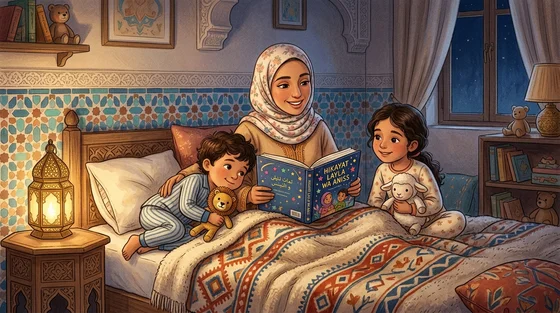
When children listen to stories in their mother tongue, their imagination flourishes naturally. Combining the warmth of family storytelling with traditional Moroccan tales fosters lasting self-confidence and pride in their heritage.

✓Practical Daily Routines✓Zero Screen Dependency✓Moroccan Darija Heritage
When children listen to stories in their mother tongue, their imagination flourishes naturally. Combining the warmth of family storytelling with traditional Moroccan tales fosters lasting self-confidence and pride in their heritage.

The 10 Core Articles

Explore each practical guide below or download the print-ready handbook for offline reading.

ARTICLE 01Child Development & Daily Routines

The Power of Daily Rhythms: Why Predictable Sequences Bring Calm to Children

💡 Key Takeaway: Children do not orient themselves with abstract clocks; they find comfort and emotional security in familiar, predictable routines.

Why It Works

Young children feel overwhelmed when they constantly have to guess what comes next. Pediatric experts confirm that anxiety drops significantly when daily transitions follow recognizable sensory milestones (dimming lights, warm milk, and the gentle melody of an evening audio story).

Practical Steps at Home

  • •Focus on Physical Steps over Rigid Timestamps: Replace "be ready by 8:00 PM" with an easy 3-step sequence: (1) Pack toys into the evening basket, (2) Wash hands with warm water, (3) Start the bedtime audio story.
  • •Dim overhead lights 60 minutes before bed: Bright white lights suppress natural sleep hormones in children. Switch to warm bedside lamps to help their bodies wind down naturally.

ARTICLE 02Play Psychology & Parental Trust

The "Boredom Pause": Why Giving Kids Space Sparks Real Creativity

💡 Key Takeaway: Boredom is not an emergency for parents to solve; it is the natural, quiet moment that sparks imaginative play and problem-solving.

Why It Works

When parents step back and give children space rather than immediately offering entertainment, kids naturally invent their own games and stories. Handing over a tablet right away cuts off that creative imagination before it can begin.

Practical Steps at Home

  • •The 10-Minute Patience Rule: When your child says "I'm bored", resist the urge to hand them a tablet. Say warmly: "It is okay to be bored. That just means your brain is getting ready for a great idea." Stay nearby without taking over their play.
  • •Open-Ended Play Bins: Keep cardboard boxes, wooden clothespins, tape, and blank drawing paper easily accessible rather than battery-operated toys with only one button.
ARTICLE 03Observation & Outing Calm

Calm in Public Spaces: Keeping Kids Engaged in Cars, Planes, and Restaurants

💡 Key Takeaway: Tantrums in public places usually stem from sensory overload and having nothing hands-on to do, rather than deliberate misbehavior.

Why It Works

In busy restaurants or waiting rooms, handing a child a tablet creates an artificial bubble; turning it off abruptly causes frustration and meltdowns. Encouraging gentle observation and quiet games keeps children calm and engaged with the world around them.

Practical Steps at Home

  • •Audio Stories for Road Trips: Play traditional Moroccan stories (like Qisati) during travels. Audio keeps the child captivated without causing car sickness or screen dependence.
  • •The "Little Detective" Game at Restaurants: Give children a fun observation challenge: "Can you spot 3 people wearing hats?" or "Find something made of brass or wood." Bring a pocket notebook and two crayons.
  • •Gentle Waiting Room Games: Try whispered counting games, finger plays, or simple word connections ("I say Camel, you say Desert") to pass the time happily.
Kids engaged during travel listening to audio stories
ARTICLE 04Language Growth & Shared Stories

Nurturing a Love for Reading: Interactive Narration & the Magic of Audio

💡 Key Takeaway: Children do not fall in love with books through alphabet drills; they fall in love through the warmth and emotional connection of shared stories.

Why It Works

Turning storytelling into an interactive conversation—asking questions, wondering together, and relating stories to daily life—expands vocabulary and language comprehension far more than passive listening.

Practical Steps at Home

  • •Make Stories a Conversation: Ask caring, open questions ("Why do you think the baker smiled?") and wonder together ("What would you have done in the little girl's shoes?").
  • •Pair Audio with Picture Books: Let children listen to soothing narrations while turning illustrated pages, strengthening their imagination and love for language.
ARTICLE 05Natural Heritage Language Learning

Moroccan Darija at Home: Passing Down Your Mother Tongue Without Pressure

💡 Key Takeaway: A heritage language cannot be taught like a school subject with vocabulary drills; it thrives as the language of warmth, laughter, and bedtime comfort.

Why It Works

Children growing up in multilingual homes often resist their heritage language if it is only used for discipline. To build natural confidence, Darija should be associated with funny bedtime tales, warmth, and family affection.

Practical Steps at Home

  • •Dedicated Darija Moments: Reserve bedtime stories, Sunday breakfast, or cooking time exclusively for speaking Moroccan Darija.
  • •Everyday Darija Immersion: Listening to native Moroccan pronunciation and rich cultural expressions (dyaf, souk, khobz d-dar, hkayat) trains the child's ear naturally and builds cultural pride.
  • •Encouragement Without Criticism: If your child replies in English or mixes words, warmly repeat what they said using the correct Darija expression, with a supportive smile.
ARTICLE 06Emotional Regulation & Tantrum Support

Guiding Big Emotions: Connection and Reflection Over Isolation

💡 Key Takeaway: During a meltdown, a child's rational thinking is temporarily offline. You cannot reason with overwhelming distress; connect with warmth first, and reflect once calm returns.

Why It Works

Isolating a crying child in a room often increases feelings of distress and fear, while raised voices heighten tension. Staying close with calm presence, followed by a brief, gentle chat once the storm has passed, teaches lasting emotional resilience.

Practical Steps at Home

  • •The 3 Steps to Calm: (1) Get down to eye level, (2) Take slow, deep breaths, (3) Acknowledge their feeling warmly: "I can see you are very upset because playtime ended. I understand, and I am right here with you."
  • •The 2-Minute Gentle Reconnect: Once calm returns, ask two supportive questions: "What can we do differently next time?" and "How can we make things better together?".
ARTICLE 07Everyday Autonomy & Self-Esteem

Independence Through Everyday Tasks: Building Responsibility from Age 2

💡 Key Takeaway: Children don't want to be passive spectators; they have an innate desire to help and feel like valued members of the family.

Why It Works

Involving young children in simple household chores—putting away shoes, wiping a table, carrying napkins—develops coordination, pride, and self-confidence. Doing everything for them can unintentionally suggest that they aren't capable.

Practical Steps at Home

  • •Ages 2–3: Putting clothes in the hamper, matching clean socks, wiping a small spill with a cloth.
  • •Ages 4–6: Setting the table with unbreakable plates, watering plants, packing their own schoolbag.
  • •Frame Tasks as Helpful Privileges: Say "You are big enough to help me carry the warm bread" instead of treating chores like a chore or punishment.
ARTICLE 08Sleep Hygiene & Screen-Free Evenings

The Evening Transition: Moving from Screen Stimulation to Bedtime Audio

💡 Key Takeaway: Fast-paced videos overstimulate young eyes and disrupt natural sleep rhythms; audio stories soothe the mind while sparking peaceful imagination.

Why It Works

Rapid visual scene changes keep the child's attention in high alert, leaving little room to form their own mental pictures. Listening to calm stories builds deep listening comprehension and imagination without eye strain or sleep disturbances.

Practical Steps at Home

  • •The "Digital Sunset": Turn off bright screens and televisions 60 to 90 minutes before bedtime.
  • •Bedtime Audio Transition: Place the phone face-down across the room and let a soothing, warm voice accompany your child into peaceful sleep.
ARTICLE 09Oral Tradition & Family Heritage

The Family Anchor: Passing Down Wisdom and Roots Through Grandparents

💡 Key Takeaway: Children who know their family stories and listen to elders show stronger emotional confidence and pride in their roots.

Why It Works

Feeling rooted in a loving family story reinforces empathy and inner security. In Moroccan tradition, grandparents (Jaddi and Lalla) are living treasures of proverbs, warmth, humor, and resilience.

Practical Steps at Home

  • •Weekly Story Calls: Set aside 15 minutes each week for grandparents to share a childhood memory ("What was school like when you were 7?").
  • •Moroccan Proverbs in Everyday Moments: Share timeless proverbs like "Qatrat b qatra kayhmel l-wad" (drop by drop the river swells) to teach patience and perseverance with warmth.
Grandparent telling traditional stories to grandchildren
ARTICLE 10Sleep Science & Evening Calming

The Evening Wind-Down: Gentle Nutrition, Calm Rhythms, and Deep Rest

💡 Key Takeaway: A restful night's sleep doesn't happen at the flick of a switch; it is a gentle transition that starts with dinner.

Why It Works

Sugary evening snacks cause blood sugar spikes that can awaken children during the night. A predictable routine and a calm soundscape help the body and mind ease naturally into deep, restorative sleep.

Practical Steps at Home

  • •A Soothing Bedtime Snack: Offer something light and nourishing (like warm milk with a date, or whole wheat bread with almond butter) 45 minutes before sleep.
  • •A Peaceful Listening Pace: Bedtime stories should be read with a calm, unhurried voice that matches a resting heartbeat, helping children drift off naturally.
⭐ Qisati Parent Guide

Download Your Printable Kits & Start Tonight

All guides are 100% free and formatted for crisp home A4 printing, ready to accompany your family bedtime routines.

Need Other Languages?

All 4 kits are also available in all official languages supported across Qisati: